La supremacía blanca se normaliza y llega al poder, advierten expertos
POR PRENSA ATLANTA GLOBAL
Las ideas supremacistas blancas —antes relegadas a los márgenes de la sociedad estadounidense— se han infiltrado de manera creciente en los espacios políticos, culturales y religiosos del país. Según expertos, esta ideología ha moldeado debates, influido en políticas públicas y alimentado una polarización sin precedentes.
Durante la videoconferencia “La normalización de la supremacía blanca: De los márgenes de la vida cotidiana a los centros del poder estadounidense”, organizada por American Community Media (ACoM), especialistas analizaron cómo estas narrativas presuntamente extremistas han encontrado legitimidad y espacio dentro del discurso público.
DE LA PERIFERIA AL CENTRO DEL PODER
Sanford F. Schram, profesor adjunto de Ciencias Políticas en la Universidad de Stony Brook (SUNY) y coautor de Hard White: The Mainstreaming of Racism in American Politics, señaló que uno de los detonantes fue la elección del primer presidente afroamericano, Barack Obama. Sin embargo, el nacionalismo blanco ya venía ganando terreno desde décadas atrás.
Recordó que figuras como Pat Buchanan, durante la era Reagan, inyectaron al Partido Republicano versiones suavizadas de las ideas que promovía el líder del Ku Klux Klan, David Duke. Con el surgimiento del Tea Party y, posteriormente, con la llegada de Donald Trump a la Casa Blanca, esa corriente cobró fuerza en medio de una ola de resentimiento racial, especialmente en torno a la inmigración.
“Hoy vemos a una nueva generación difundiendo memes neonazis en redes sociales como si fuera una tendencia moderna”, alertó Schram.
INTERNET, ANONIMATO Y UN NUEVO LENGUAJE EXTREMISTA
Heath Druzin, periodista y presentador del podcast Extremely American, describió cómo en los rincones más oscuros de internet se ha normalizado la apología abierta a Hitler.
“Hemos pasado de burlarnos de quienes comparaban todo con Hitler, a ver gente diciendo: ‘Quizá Hitler no estaba tan mal’”, advirtió.
Druzin recordó que en 2015, cuando Trump calificó a los inmigrantes de “violadores” y “delincuentes”, ese tipo de discurso habría sido impensable en la política tradicional. Hoy, dijo, se ha vuelto común.
Las redes sociales, añadió, son parte fundamental del problema: “En línea, muchos se sienten libres de expresar ideas que jamás dirían en público. El anonimato les da protección y aprobación inmediata”.
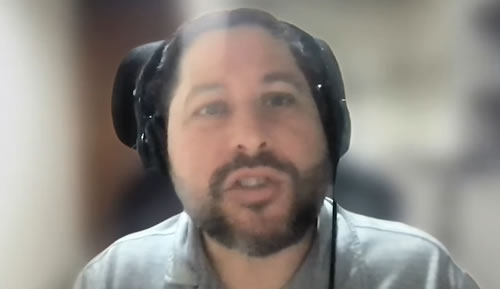
- Druzin indicó que “este tipo de retórica se ha normalizado en el ámbito político. Las redes sociales desempeñan un papel central en ello, ya que permiten a muchos expresar comentarios que no se atreverían a pronunciar en espacios presenciales. El anonimato digital genera una sensación de impunidad y les brinda validación sin tener que enfrentar críticas directas”.
Esto ha generado líderes políticos dispuestos a repetir abiertamente narrativas extremistas que antes habrían evitado.
LA INTERSECCIÓN ENTRE EXTREMISMO Y NACIONALISMO CRISTIANO
Matthew D. Taylor, doctor e investigador del Institute for Islamic, Christian and Jewish Studies (ICJS), destacó la incorporación de nuevos actores cristianos radicales dentro de estos movimientos desde la campaña de Trump en 2015.
Explicó que el sector cristiano de mayor crecimiento —carismático y no denominacional— se caracteriza por una supervisión mínima y una espiritualidad centrada en lo sobrenatural. Este movimiento, dijo, ha crecido aceleradamente en Estados Unidos y en el mundo.
Trump, añadió, logró integrar a esta coalición en el ecosistema de la extrema derecha, fusionando ideas de supremacía cristiana con una mitología que lo eleva a una figura cuasi mesiánica para sectores de la coalición MAGA.
“Estas narrativas han activado simultáneamente las vertientes racistas y supremacistas cristianas dentro del movimiento”, afirmó.
LA EXPANSIÓN DEL ACTIVISMO EXTREMISTA
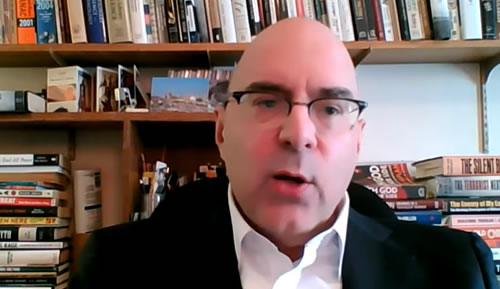
Devin Burghart, director ejecutivo del Institute for Research & Education on Human Rights (IREHR), explicó que para comprender el auge actual de la extrema derecha es necesario reconocer las múltiples corrientes que convergen en ella.
Recordó que en las últimas tres décadas estos movimientos han crecido exponencialmente. “Durante lo más intenso de la pandemia, rastreamos a 2.4 millones de activistas expuestos a ideas de resentimiento racial, negacionismo del COVID y conspiraciones antivacunas”, señaló.
Este activismo, aseguró, no solo mueve a las bases, sino que influye directamente en la política.
- En 2022, documentaron que 875 legisladores estatales se habían unido a uno o más grupos de extrema derecha, desde paramilitares y negacionistas del COVID hasta organizaciones antisemitas y movimientos inspirados en QAnon.
“Cuando los legisladores estatales se alinean con estas organizaciones, ideas antes marginales pasan directamente al debate público y terminan convertidas en políticas”, afirmó.
Como ejemplo, mencionó dos estados que aprobaron leyes contra la geoingeniería basadas en teorías conspirativas antes consideradas absurdas.
Un análisis de 2024 reveló que casi 1000 legisladores estatales podrían sumarse a estas corrientes extremistas.
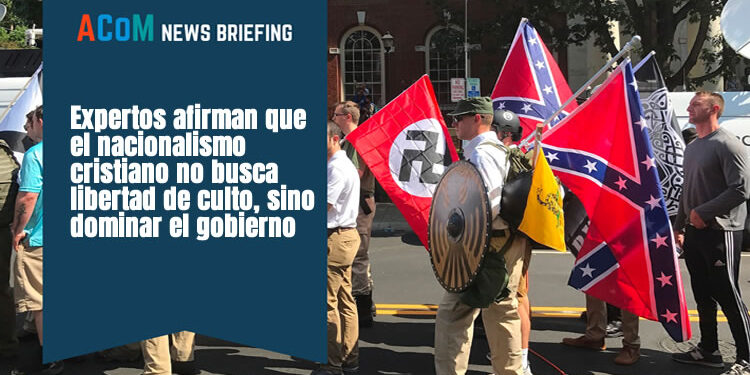
Expertos alertan sobre la normalización de la supremacía blanca en la política estadounidense
Afirman que el nacionalismo cristiano busca imponer su visión religiosa en el gobierno
LOS PANELISTAS
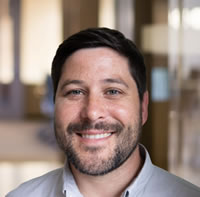 Heath Druzin | hdruzin@gmail.com
Heath Druzin is the host and creator of the Extremely American podcast series. In the fi rst season, Heath takes listeners inside the world of the ascendant Patriot Movement where he talks with the militia members and far-right activists who are simultaneously preparing to fi ght the government and become part of it.
The second season of Extreme American is an inside look at Christian nationalism, a movement that aims to end American democracy as we know it and install theocracy, taking rights away from the vast majority of Americans in the process.
Heath is also the host of Howl, a podcast about the reintroduction of wolves in Yellowstone.
Prior to launching his podcasts, Heath was Boise State Public Radio’s Guns & America fellow from 2018-2020, during which he focused on extremist movements, suicide prevention and gun culture.
Previously he covered the wars in Iraq and Afghanistan and veterans issues for Stars and Stripes newspaper and government and crime for The Idaho Statesman. His work has been featured on NPR’s Morning Edition, All Things Considered, and the BBC.
When he’s not reporting, you’ll probably fi nd Heath in the mountains splitboarding, hiking, biking, fl yfi shing or soaking in a hot spring.
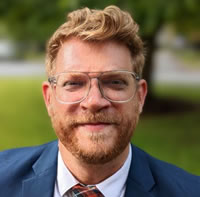 Matthew D. Taylor, Ph.D. | mtaylor@icjs.org
Matthew holds a Ph.D. in Theological and Religious Studies with an emphasis in comparative religion and modern radical movements of Muslims and Christians. His day job involves challenging antisemitism, Islamophobia, and Christian nationalism; training and equipping Christians for interfaith engagement; and facilitating dialogue among Christians, Muslims, Jews, and others. Matthew’s scholarly areas of expertise are in Islam, especially American Salafi sm, and in Christianity, particularly evangelical and Pentecostal movements and U.S. politics. His fi rst book, Scripture People: Salafi Muslims in Evangelical Christians’ America (Cambridge University Press, 2023), compares the convergent experiences and styles of relating to scripture between American Salafi s and American Evangelicals. His second book, The Violent Take It by Force: The Christian Movement that is Threatening Our Democracy (Broadleaf, 2024) tracks how the Christian leadership networks of the New Apostolic Reformation played a central role in instigating the January 6th Capitol Riot and warns of the ongoing menace these leaders and their ideas pose to liberal democracy.
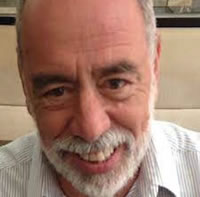 Sanford F. Schram | ss1745@hunter.cuny.edu
Sanford F. Schram is Professor Emeritus in the Political Science Department at Hunter College, CUNY. He is also Adjunct Lecturer in Political Science at Stony Brook University, State University of New York (SUNY). Schram has published a number of books, including Words of Welfare (1995) andDisciplining the Poor (2011), co-authored with Joe Soss and Richard Fording, both of which received the Michael Harrington Best Book Award from the Caucus for a New Political Science (CNPS). Schram is a recipient of the CNPS Charles A. McCoy Career Achievement Award. A recent book, co-authored with Richard Fording, is entitled Hard White: The Mainstreaming of Racism in American Politics(2020). His new book just published is The Trajectory of Trumpism: Talking about Racism, Fascism, Civil War and Beyond (2026).
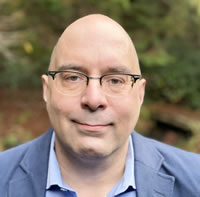 Devin Burghart | Dburghart@irehr.org
Devin Burghart is president and executive director of the Institute for Research and Education on Human Rights—a national non-profi t organization dedicated to tracking emerging threats to democracy and human rights.
Devin is an internationally recognized expert on far-right political and social movements. For over three decades, he has relentlessly researched a wide range of threats. His written work includes groundbreaking investigative reporting on transnational white nationalist activity, “scientifi c” racism, anti-Semitism and Holocaust denial, the militia movement, white power music, the anti-immigrant movement, anti-vaccine organizing, COVID Denial, and more. Recent publications include Ammon’s Army: Inside the Far-Right People’s Rights Network, Facebook and COVID Denial, and Breaching the Mainstream: A National Survey of Far-Right Membership in State Legislatures.
Devin’s research has been cited by the New York Times, Wall Street Journal, Washington Post, Chicago Tribune, Los Angeles Times, and many others. He has also appeared on CNN, MSNBC, CBS News and National Public Radio, and other broadcast media outlets. His work has also been cited by Congressional Committees, including the January 6th Commission.
Before joining the IREHR staff in 2009, Devin was director of the Building Democracy Initiative of the Center for New Community in Chicago for eleven years. He was also a research analyst with the Coalition for Human Dignity in Seattle. In 2007, he was awarded a Petra Foundation fellowship for his “distinctive contributions to the rights, autonomy, and dignity of millions who are marginalized in America.”